
Read in English below
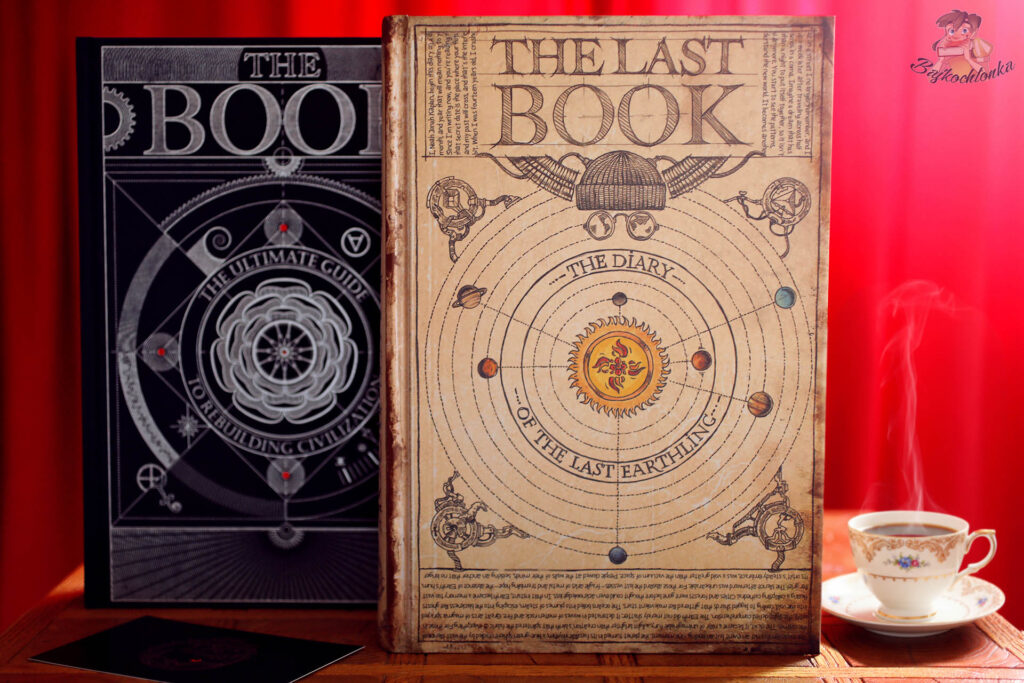
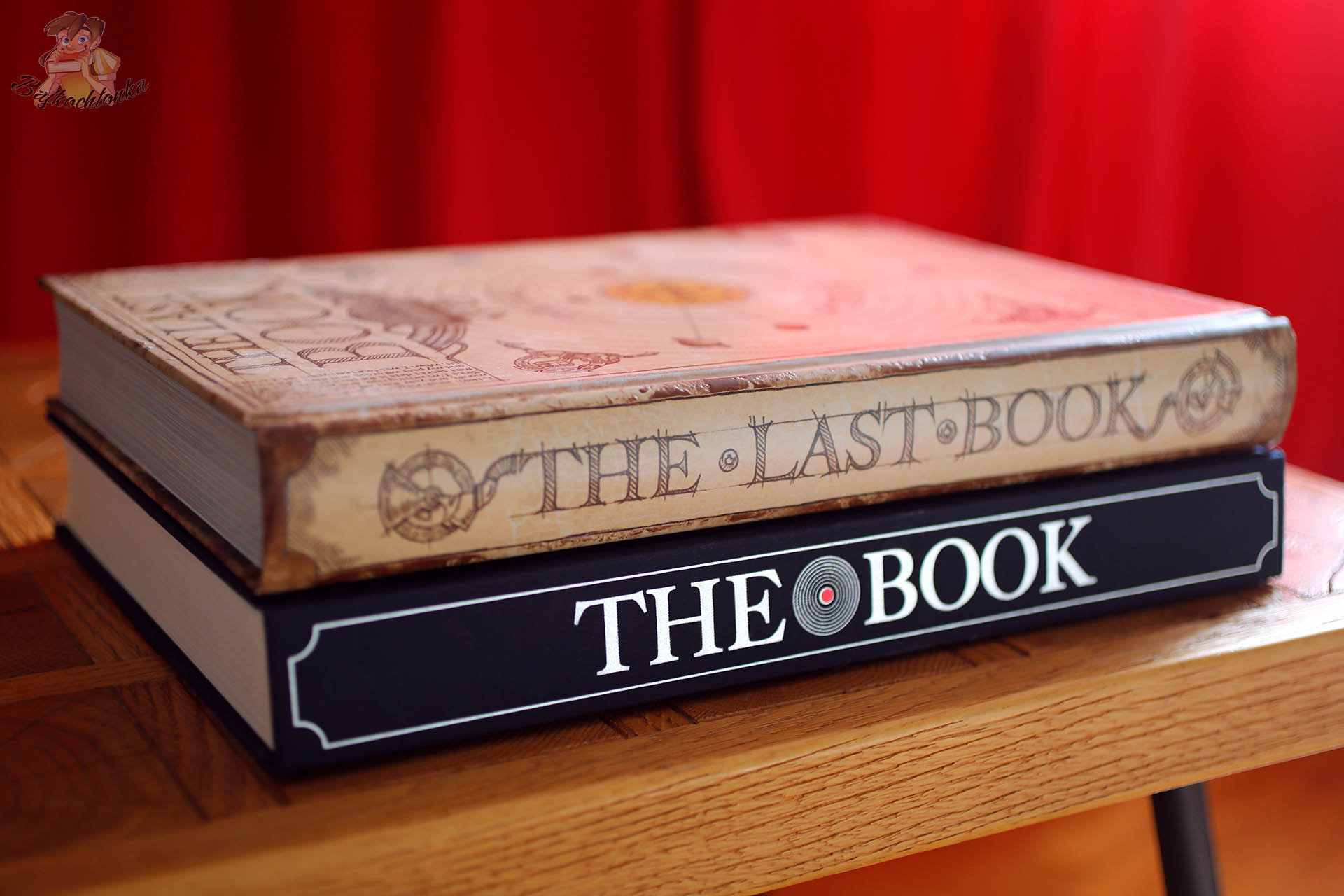
Czy można opisać człowieka kiedy przestaje istnieć świat, który go do tej pory definiował? The Last Book: The Diary of the Last Earthling to projekt zdecydowanie wymykający się prostym klasyfikacjom gatunkowym. Formalnie sytuuje się na pograniczu artbooka, powieści graficznej i eseju filozoficznego, lecz w istocie stanowi coś więcej: próbę archiwizacji ludzkiej tożsamości w obliczu ostatecznej katastrofy.
Po sukcesie The Book. The Ultimate Guide to Rebuilding a Civilization twórcy – Lev Kaplan jako dyrektor kreatywny, pisarz Jonah Howell oraz rozbudowany zespół ilustratorów i współautorów – wykonali niemal radykalny zwrot w sposobie myślenia o narracji. Jeśli poprzedni projekt miał charakter quasi-encyklopedyczny i konstruktywistyczny, The Last Book jest dziełem introspektywnym, intymnym oraz egzystencjalnym.
➜ Tytuł: The Last Book. The Diary of The Last Earthling
➜ Pomysłodawcy: Lev Kaplan, Timur Kadyrov, Seva Batishchev
➜ Tekst: Jonah Howell
➜ Ilustracje: Lev Kaplan, Yaroslava Bogorodskaya, Sergey Vorobyev, Andrey Svistunov, Anton Osinzev, Alexey Nikanorov, Shuyan Chen, Denis Gordeev, Uladzimir Dowgialo
➜ Wydawnictwo: Hungry Minds
➜ Rok wydania: 2025
➜ Objętość: prawie jak encyklopedia!
➜ Dla kogo: dla samodzielnych w czytaniu
➜ Ocena ogólna: wybitna
Od instrukcji odbudowy do zapisu samotności
Najważniejsza zmiana dotyczy perspektywy myślenia o fabule. Tym razem nie otrzymujemy przewodnika odbudowy cywilizacji, lecz dziennik oraz… konkretnego bohatera. Noah Jonah Kaplan, ostatni Ziemianin – pozostaje samotnym świadkiem globalnej katastrofy i rozpadu planety. Jego zapiski, z braku innych możliwości, kierowane są do Obcych. Do istot spoza ludzkiego doświadczenia, co czyni sposobność opowiedzenia im o człowieku w bardziej pogłębiony sposób.
W chwili, kiedy ludzkość przestaje być wspólnotą, jej historia wciąż może trwać. Zmienia jedynie adresata. Opowieść ma swoją kontynuację – nawet jeśli nie posiada wielu odbiorców.
Noah nie rekonstruuje świata linearnie. Jego zapiski są fragmentaryczne, chaotyczne, chwilami zadziwiająco uporządkowane. To konstrukcja przypominająca notatnik antropologa, filozofa i artysty jednocześnie. W tym sensie The Last Book nie jest klasyczną narracją postapokaliptyczną. To literacki oraz wizualny manifest, wypełniony rozmaitymi, ale niezwykle interesującymi przemyśleniami.
Struktura ludzkiego doświadczenia
Księga The Last Book została podzielona na rozległe działy, które naturalnie wpisują się w rozwój refleksji bohatera. Autorzy prowadzą czytelnika przez:
- fundamenty cywilizacji i jej instytucji,
- religię oraz systemy wierzeń,
- cielesność i biologiczną kondycję człowieka,
- rytuały i praktyki kulturowe,
- jedzenie, architekturę, środowisko,
- narracje budujące wspólnoty,
- literaturę, sztukę, muzykę i film.
Ta struktura nie jest przypadkowa. To próba zrekonstruowania człowieka jako istoty wielowarstwowej: biologicznej, duchowej, symbolicznej i kulturowej. Twórcy podejmują ryzyko totalności – chcą objąć możliwie szerokie spektrum tego, co definiuje nas jako gatunek.
W efekcie The Last Book przyjmuje formę monumentalnej księgi cywilizacyjnej, która łączy science fiction z refleksją antropologiczną.
Filozofia, metafizyka i niepokój interpretacyjny
Warstwa filozoficzna książki jest wyraźnie czytelna. Pomijając bezpośrednie nawiązania do doktryn filozoficznych czy samych filozofów, autorzy stawiają również pytania o:
- sens ludzkiej egzystencji,
- miejsce człowieka w skali kosmicznej,
- możliwość istnienia innych światów,
- konstrukcyjność naszych systemów wartości.
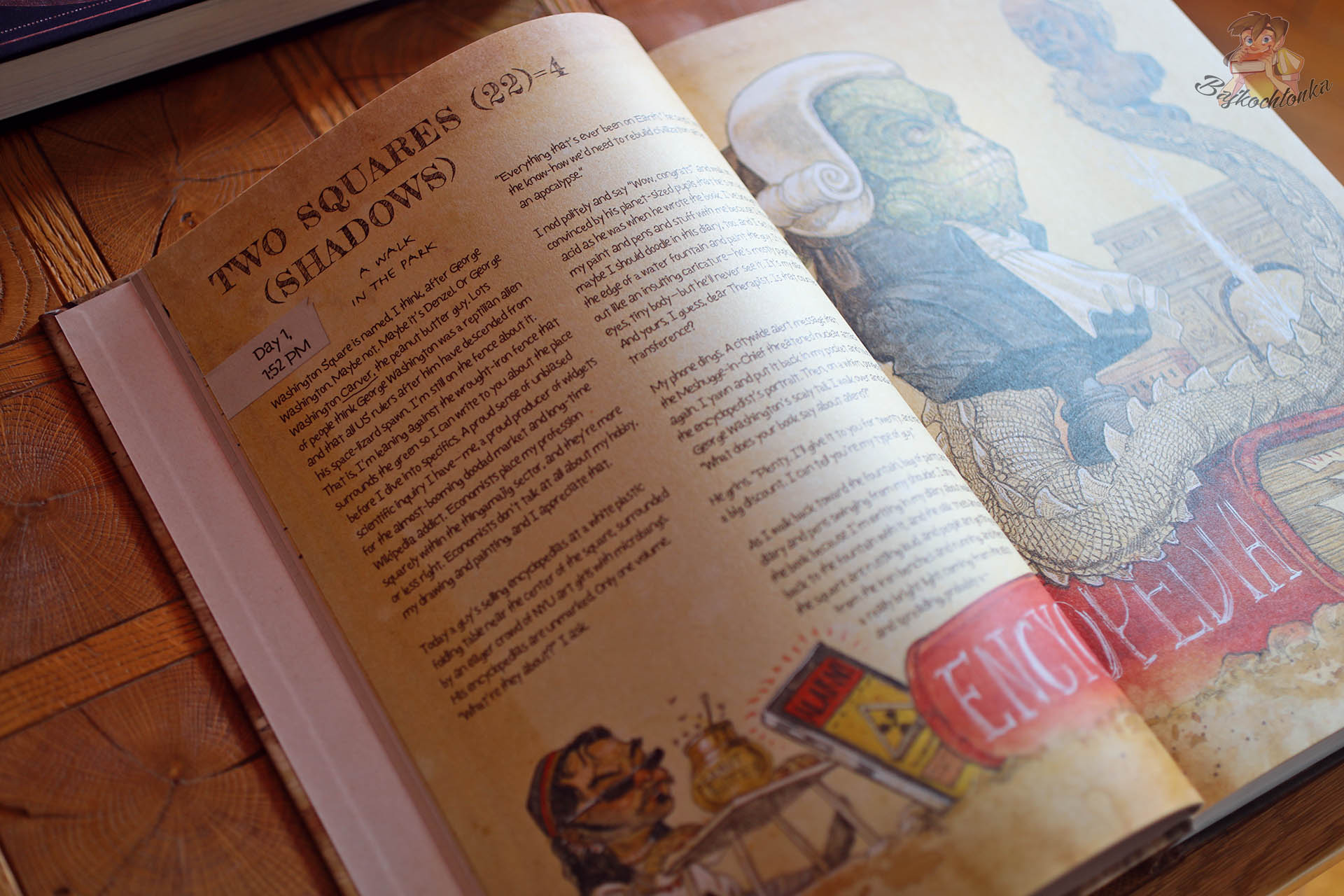
W narracji pojawiają się także wątki ocierające się o teorie spiskowe czy alternatywne wizje historii. Bohater dopatruje się znaczeń tam, gdzie wiele osób nawet nie podejmuje trudu poszukiwania. Jego rozważania funkcjonują jako element refleksji nad kruchością wiedzy i nad tym, jak łatwo rzeczywistość może zostać przeinterpretowana lub niedointerpretowana.
To pozycja, która prowokuje do zajęcia stanowiska w określonym temacie. I w tym sensie może być opiniotwórcza, bo nie pozwala pozostać obojętnym na to, co nas otacza.
Estetyka jako argument
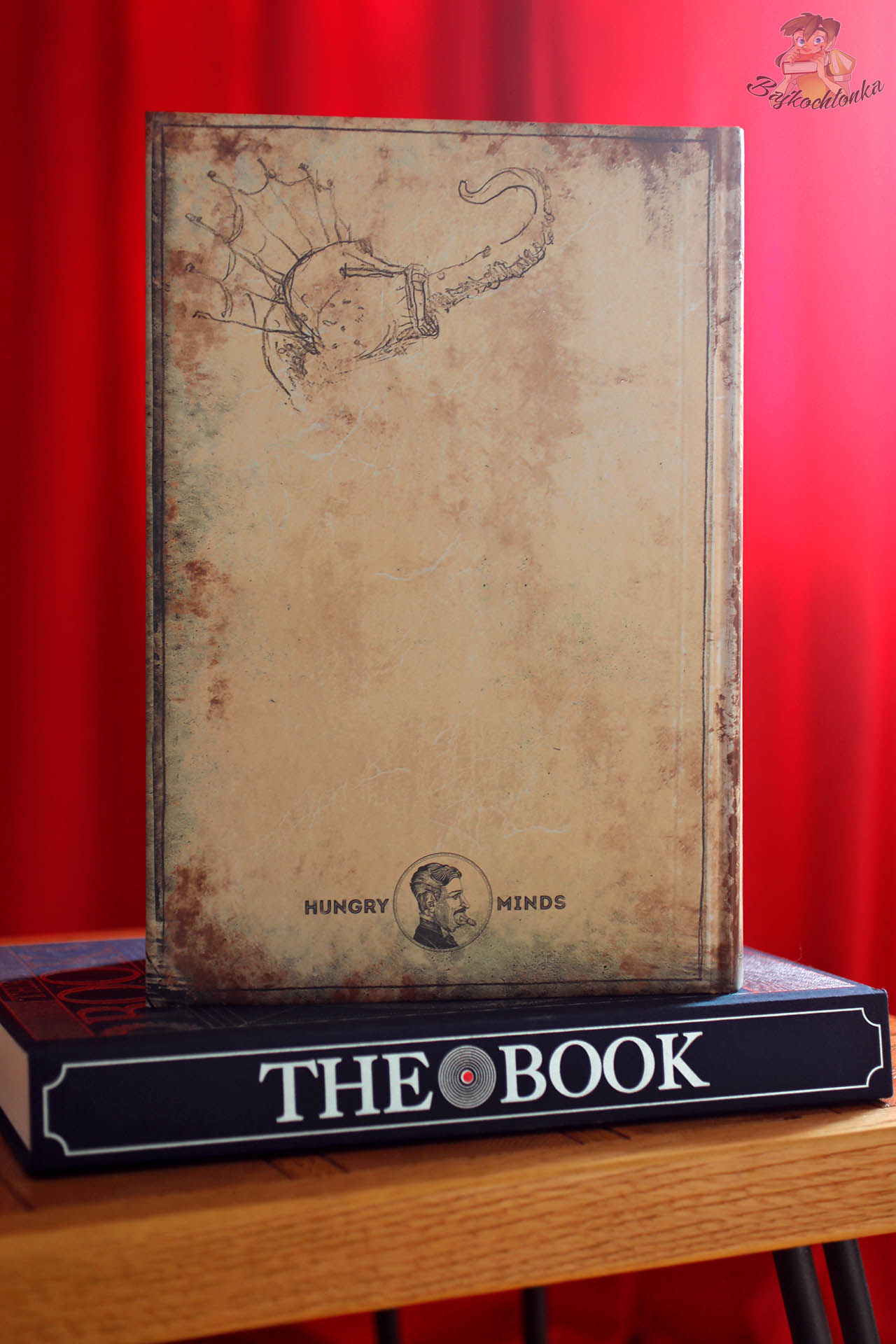
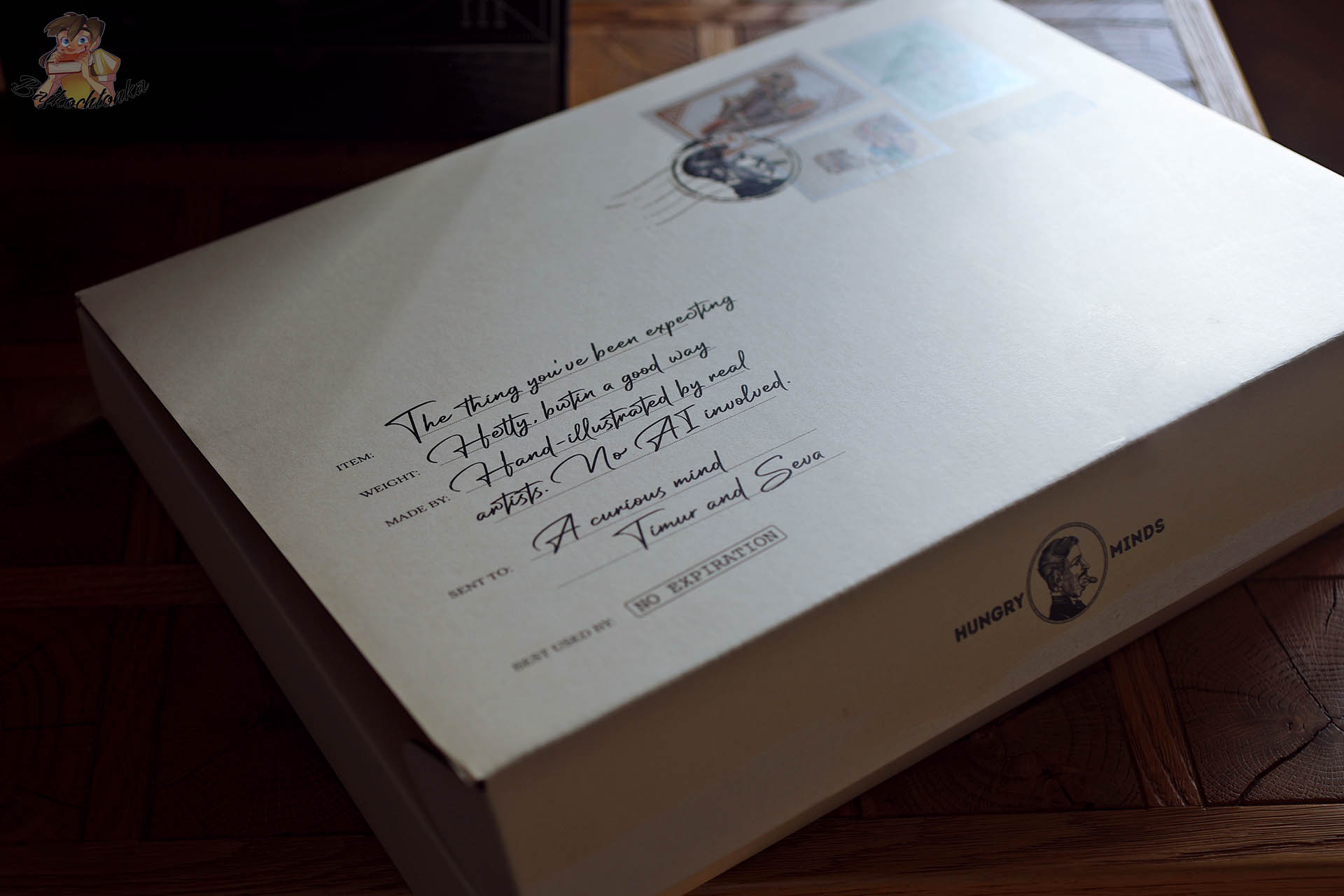
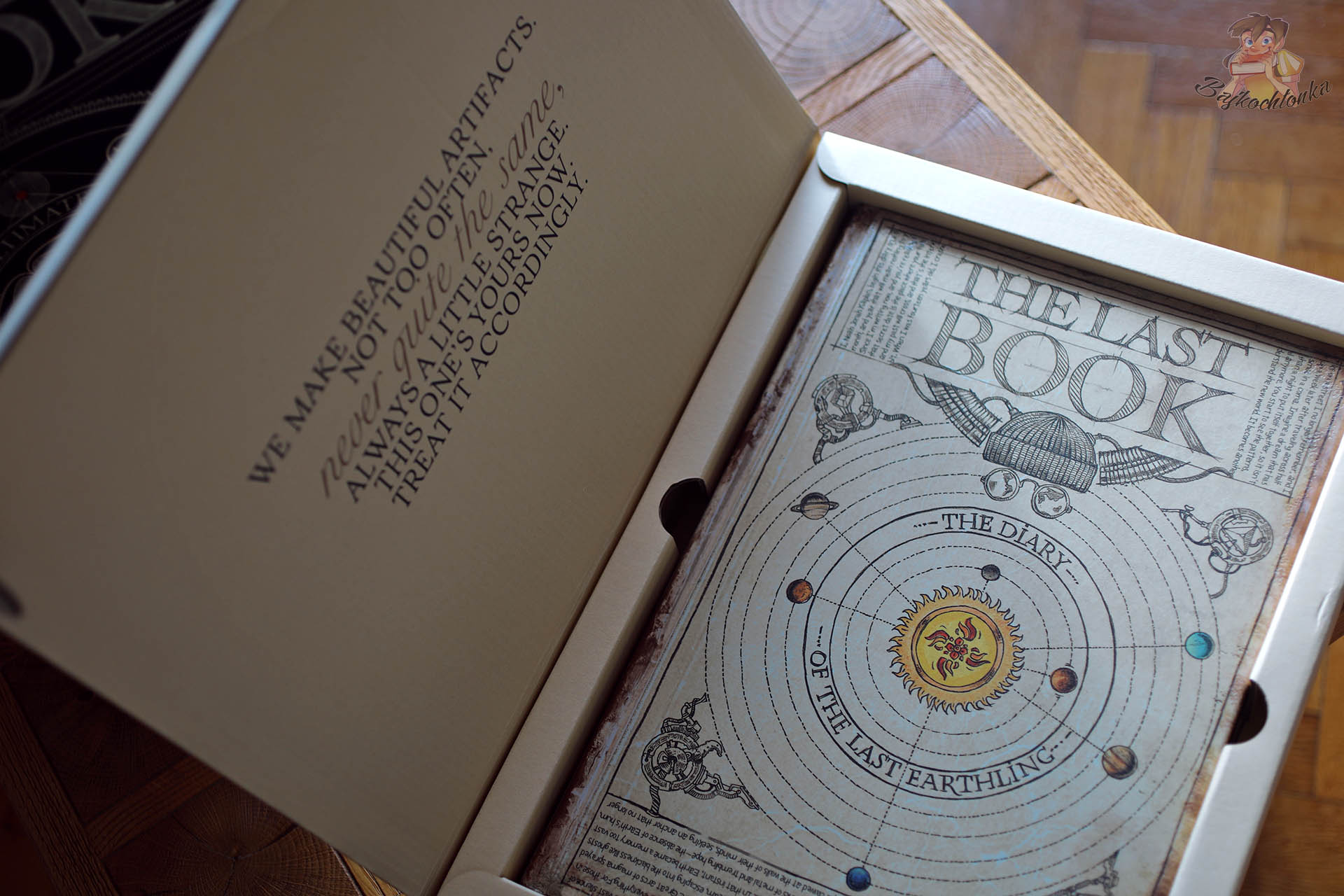
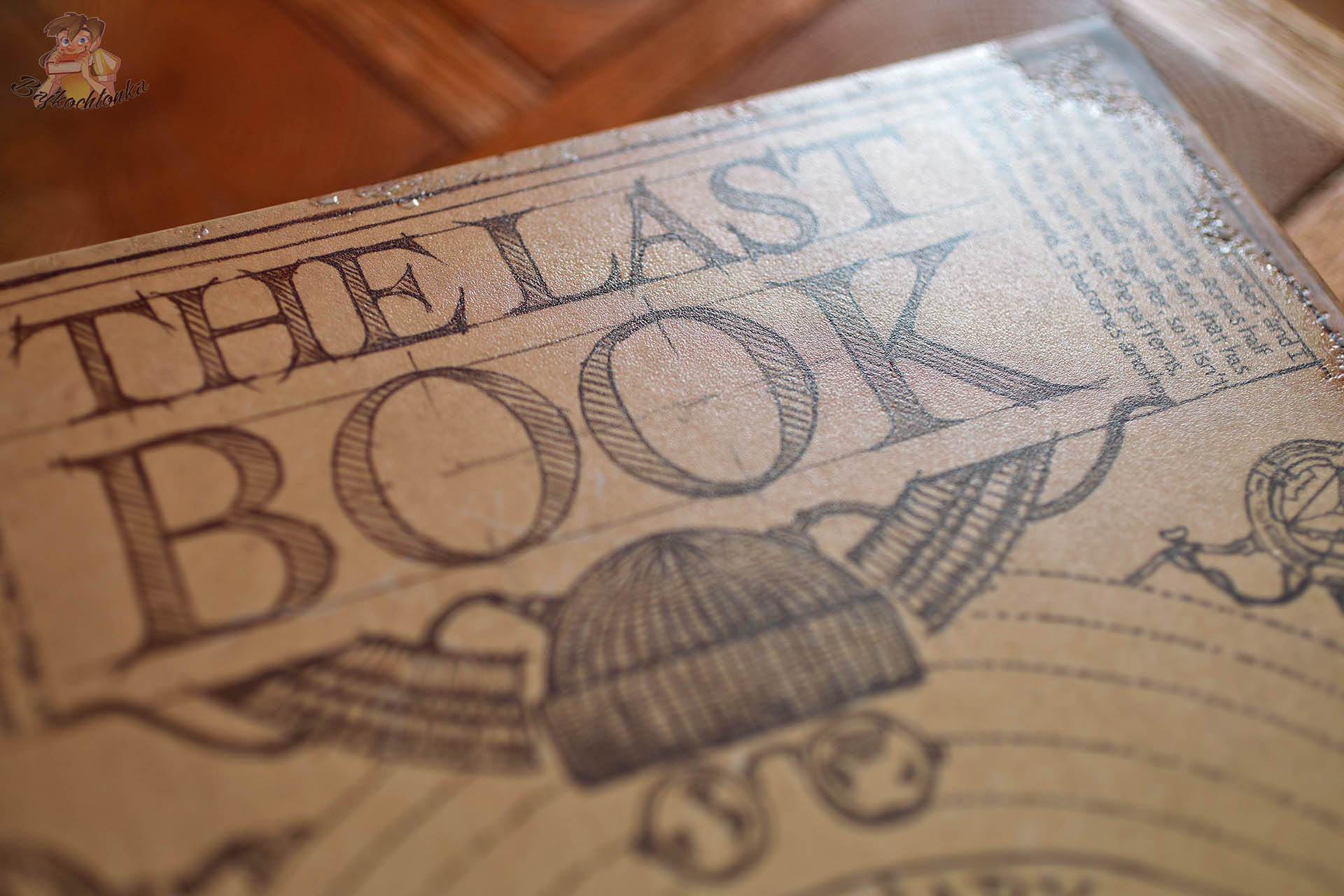
Jednym z najbardziej imponujących aspektów The Last Book jest jej szata graficzna. Projekt został dopracowany z niezwykłą pieczołowitością. Książka przychodzi w dedykowanym pudełku stylizowanym na klasyczną, retro kopertę. Już sam moment otwarcia buduje narrację – jakby czytelnik otrzymywał ostatnią przesyłkę z nieistniejącej planety.
Wnętrze potęguje to wrażenie:
- papier o wysokiej gramaturze,
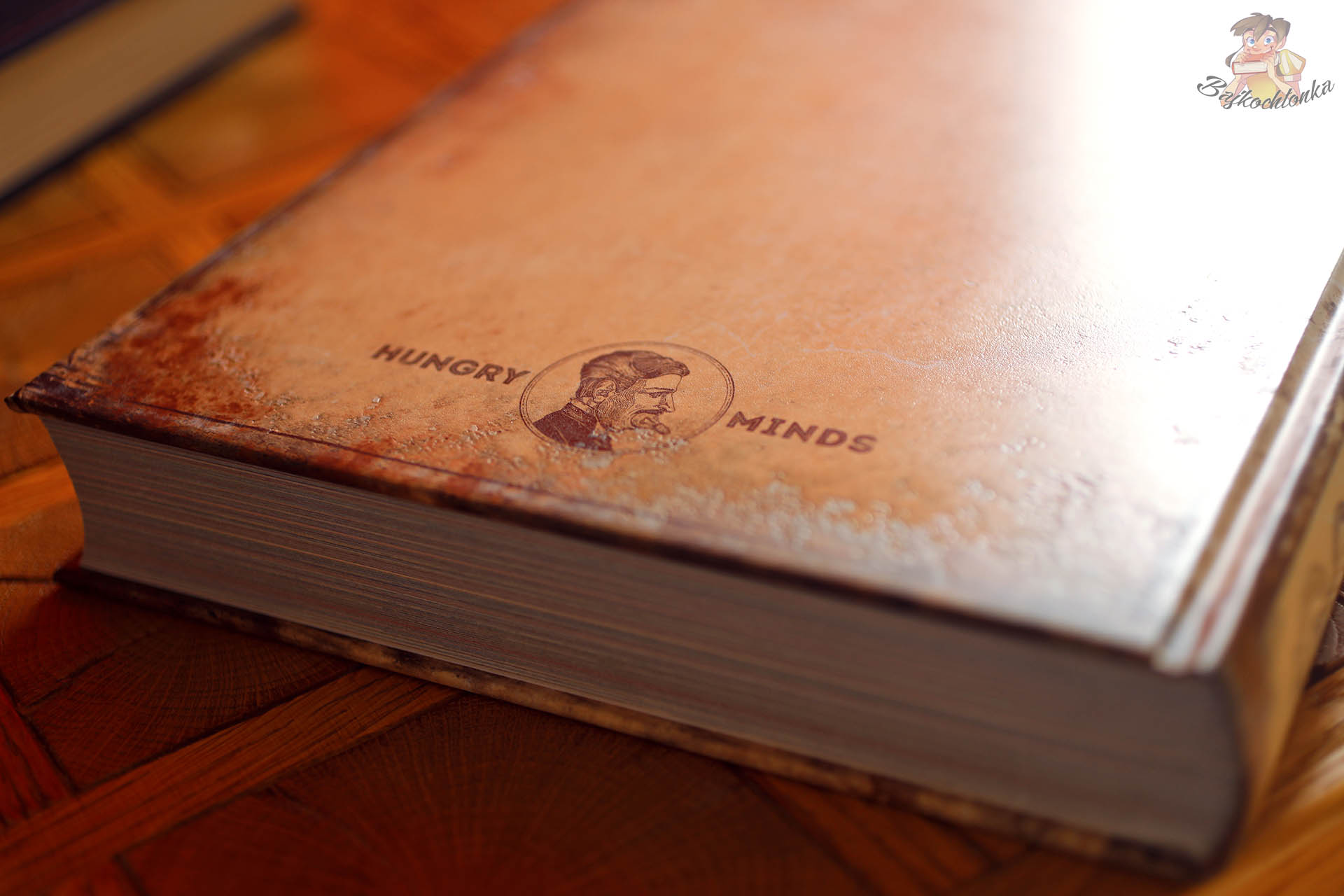
- teksturowana oprawa,
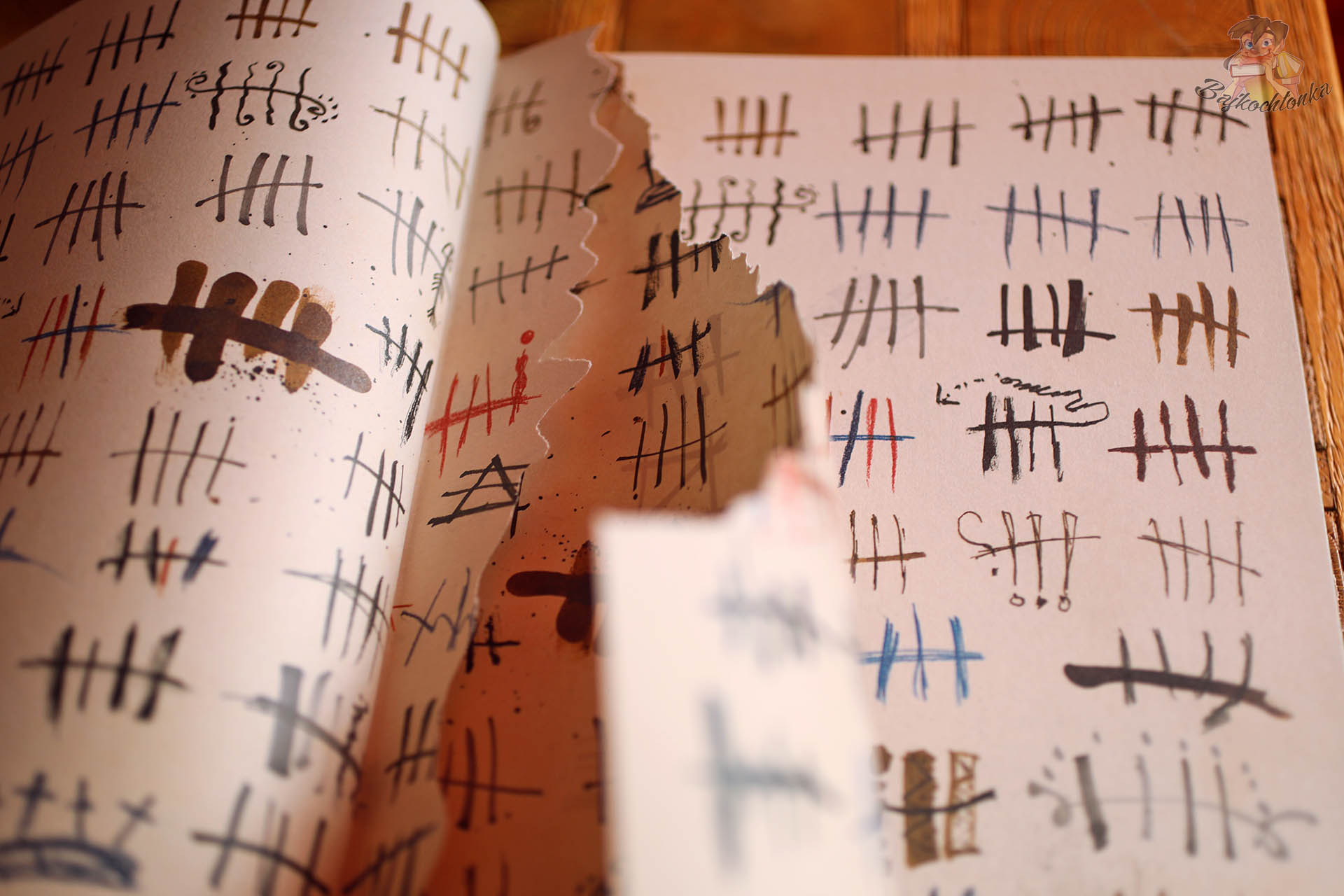
- rozkładówki imitujące wyrwane kartki,
- przekreślenia, podkreślenia, odręczne zaznaczenia,
- subtelne ingerencje graficzne w składzie.
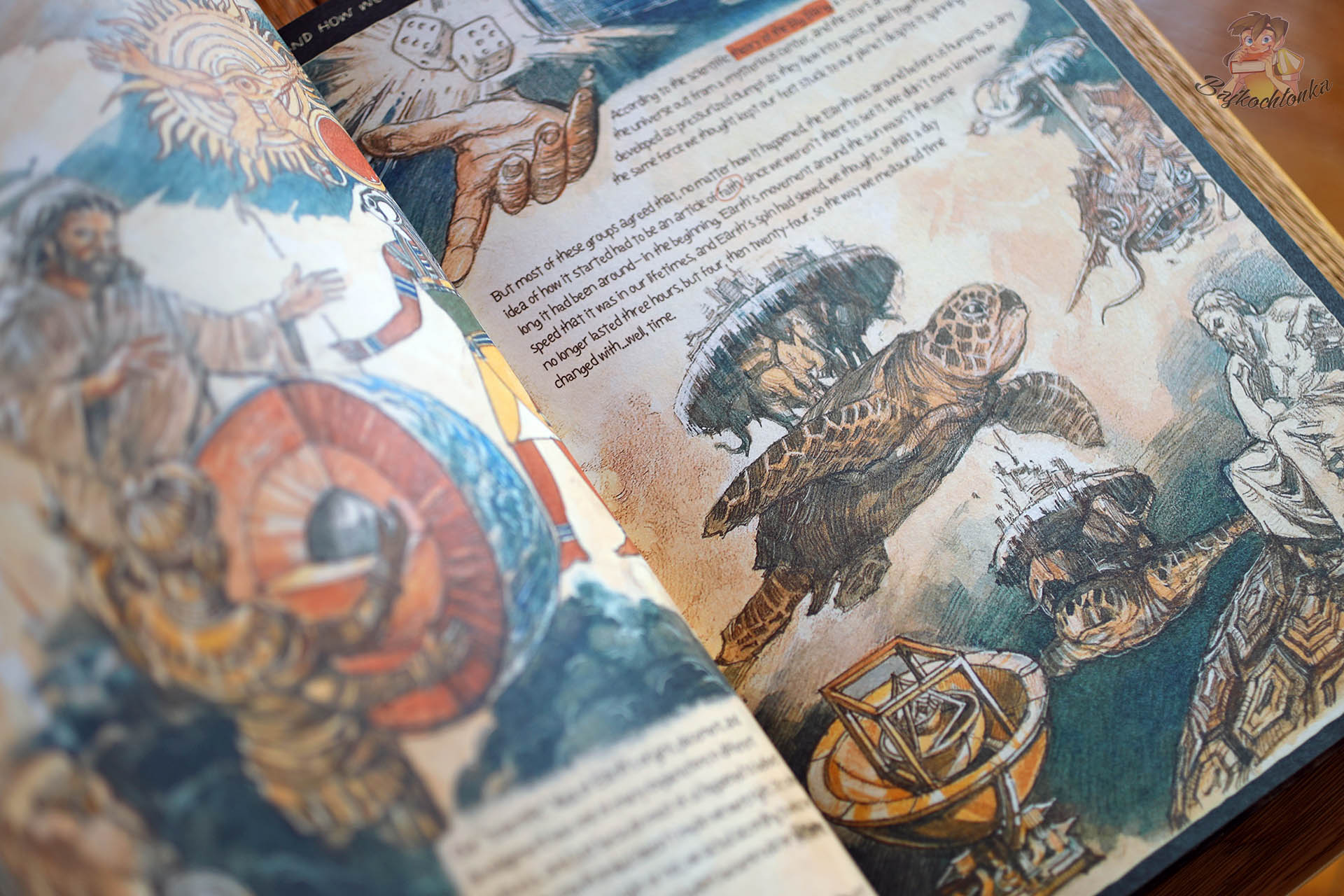
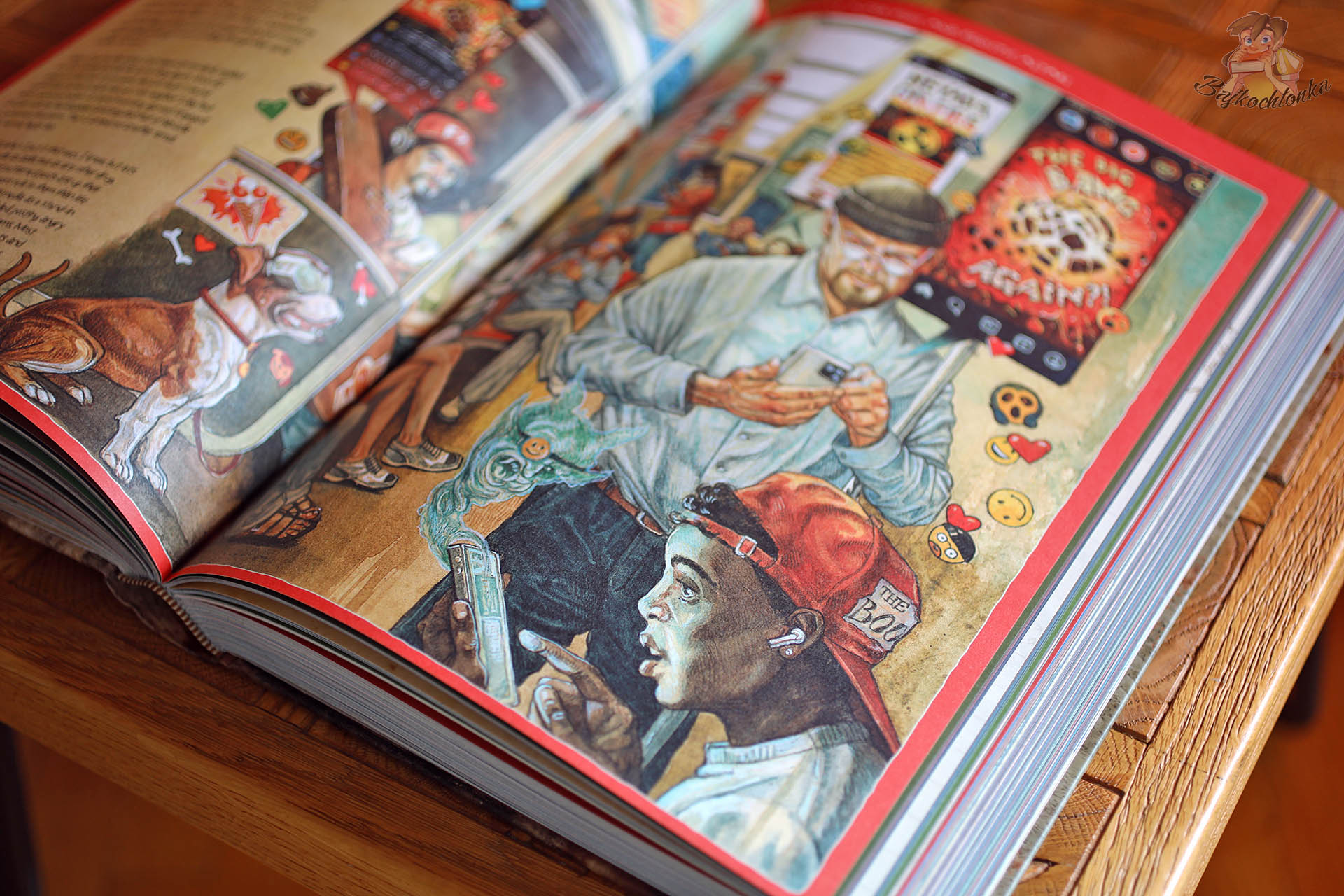
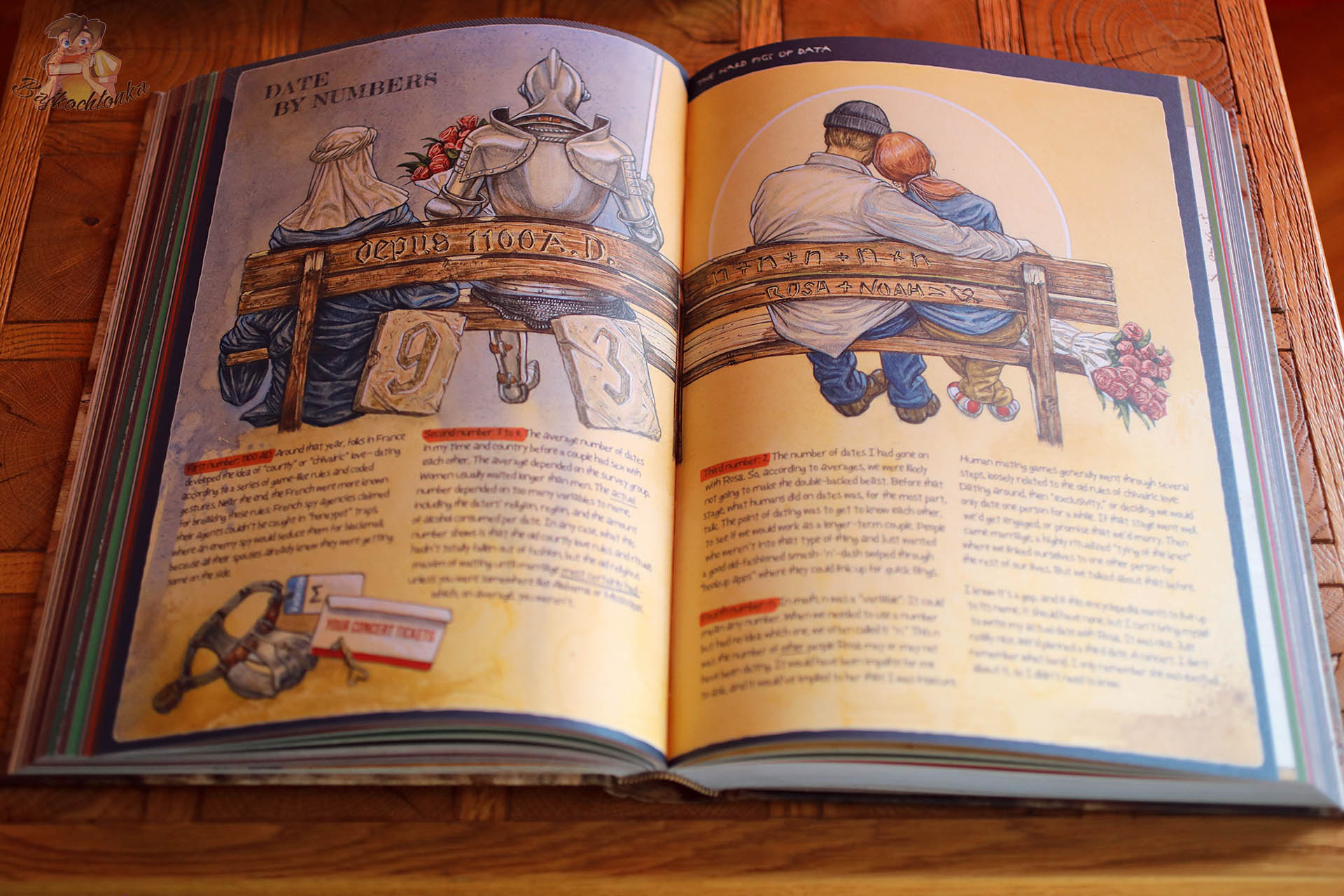
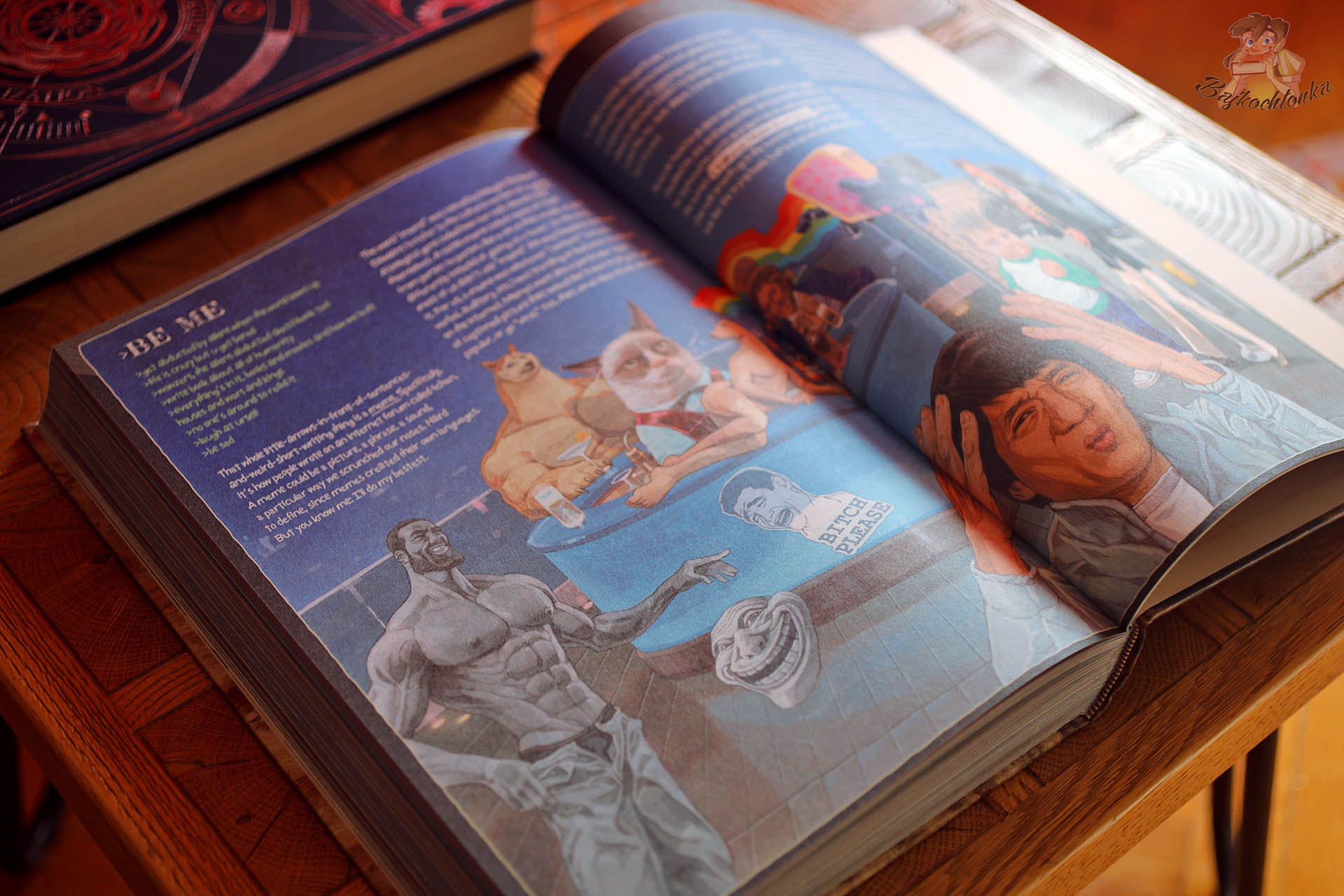
Setki ilustracji – nadzorowanych przez Leva Kaplana – nadają księdze charakter niemal muzealnego artefaktu. Estetyka pełni tutaj ogromne znaczenie. Wzmacnia wiarygodność świata przedstawionego i nadaje mu materialną gęstość.
Całość sprawia wrażenie ręcznie pisanego dziennika, który dopiero później został skrupulatnie powielony. To edytorski majstersztyk, bez dwóch zdań.
Testament ludzkości do Obcych
Ambicja projektu mogła być więc zarazem jego siłą, jak i potencjalną słabością. Próba objęcia całego ludzkiego doświadczenia niesie ryzyko uproszczeń, niedopowiedzeń. Monumentalność formy może przytłaczać intymność narracji. Nic takiego jednak nie ma miejsca. Książka pozostaje konsekwentna estetycznie oraz koncepcyjnie. Jej rozmach jest przemyślany. Wysiłki tego projektu zostały zresztą już nagrodzone – The Last Book otrzymała tytuł Best Independent Book w konkursie Best Indie Book Award.
The Last Book to projekt ambitny, monumentalny i świadomie prowokujący. Wykorzystując konwencję postapokaliptycznego dziennika, twórcy stworzyli dzieło balansujące między fikcją a filozoficznym esejem o naturze człowieka. To artefakt kulturowy. Próba zapisania ludzkości w chwili jej hipotetycznego końca. Polecam ją dorosłym odbiorcom.
Sprawdzajcie dostępność The Last Book na oficjalnej stronie wydawnictwa Hungry Minds.
FAQ – THE LAST BOOK
O czym jest książka The Last Book?
The Last Book: The Diary of the Last Earthling to postapokaliptyczna opowieść w formie dziennika ostatniego Ziemianina, Noaha Jonaha Kaplana. Bohater zapisuje historię ludzkości po globalnej katastrofie, kierując swoje słowa do Obcych. Książka łączy elementy science fiction, filozofii, eseju kulturowego oraz artbooka.
Czy The Last Book to powieść, komiks czy album artystyczny?
To projekt hybrydowy. Książka łączy narrację literacką z rozbudowaną warstwą ilustracyjną. Można ją określić jako artbook z elementami powieści graficznej i eseju filozoficznego. Setki ilustracji współtworzą narrację i budują wizualną tożsamość świata przedstawionego.
Czym różni się The Last Book od The Book. The Ultimate Guide to Rebuilding a Civilization?
Najważniejsza różnica dotyczy perspektywy narracyjnej. The Book miało charakter quasi-encyklopedyczny i skupiało się na odbudowie cywilizacji. The Last Book przyjmuje formę intymnego dziennika ostatniego człowieka i koncentruje się na refleksji nad ludzką tożsamością, duchowością oraz sensem istnienia.
Kim jest Noah Jonah Kaplan?
Noah Jonah Kaplan to fikcyjny bohater i narrator The Last Book. Jako ostatni Ziemianin dokumentuje historię ludzkości po katastrofie, analizując fundamenty cywilizacji, religię, sztukę, kulturę i kondycję człowieka.
Dla kogo jest przeznaczona książka The Last Book?
To pozycja dla dorosłych czytelników, kolekcjonerów artbooków oraz miłośników ambitnego science fiction. Najwięcej zyskają osoby zainteresowane filozofią, antropologią kultury oraz projektami edytorskimi premium.
Czy The Last Book to książka kolekcjonerska?
Tak. Wydanie wyróżnia się wysoką jakością druku, papierem o dużej gramaturze oraz teksturowaną oprawą. Detale typograficzne i ilustracyjne sprawiają, że książka ma charakter artefaktu kolekcjonerskiego.
in English:
Review of the Monumental Diary THE LAST BOOK – What Will Remain of Humanity? Even When the World Ends, the Story Continues
Can one describe humanity when the world that once defined it ceases to exist? The Last Book: The Diary of the Last Earthling is a project that decisively resists simple genre classifications. Formally, it stands at the crossroads of art book, graphic novel, and philosophical essay. In essence, however, it becomes something more: an attempt to archive human identity in the face of ultimate catastrophe.
Following the success of The Book: The Ultimate Guide to Rebuilding a Civilization, the creators – Lev Kaplan as creative director, writer Jonah Howell, and an extensive team of illustrators and collaborators – executed an almost radical shift in their approach to narrative. If the previous project was quasi-encyclopedic and constructivist in nature, The Last Book is introspective, intimate, and profoundly existential.
From a Reconstruction Manual to a Record of Solitude
The most significant change concerns narrative perspective. This time, we do not receive a guide to rebuilding civilization, but a diary – and a distinct protagonist.
Noah Jonah Kaplan, the last Earthling, remains the solitary witness to global catastrophe and planetary collapse. His notes, in the absence of any remaining audience, are addressed to Aliens – beings beyond human experience. This narrative device allows humanity to be described in a more distilled and reflective way.
When humanity ceases to function as a community, its story may still endure. Only the addressee changes. The narrative continues – even if it no longer has many recipients. Noah does not reconstruct the world linearly. His entries are fragmentary, at times chaotic, at times strikingly structured. The form resembles the notebook of an anthropologist, philosopher, and artist simultaneously. In this sense, The Last Book is not a conventional post-apocalyptic narrative. It is a literary and visual manifesto filled with diverse yet deeply compelling reflections.
The Structure of Human Experience
The Last Book is divided into expansive sections that naturally align with the evolution of the protagonist’s reflections. The authors guide the reader through:
-
the foundations of civilization and its institutions,
-
religion and belief systems,
-
corporeality and the biological condition of humanity,
-
rituals and cultural practices,
-
food, architecture, and the environment,
-
narratives that build communities,
-
literature, art, music, and film.
This structure is deliberate. It attempts to reconstruct humanity as a multilayered being: biological, spiritual, symbolic, and cultural. The creators take the risk of totality – striving to encompass the broadest possible spectrum of what defines us as a species.
As a result, The Last Book assumes the form of a monumental civilizational volume, merging science fiction with anthropological reflection.
Philosophy, Metaphysics, and Interpretive Unease
The philosophical layer of the book is unmistakably present. Beyond implicit references to doctrines and thinkers, the authors raise questions about:
-
the meaning of human existence,
-
humanity’s place within the cosmic scale,
-
the possibility of other worlds,
-
the constructed nature of our value systems.
The narrative also touches upon threads that brush against conspiracy theories and alternative visions of history. The protagonist perceives meaning where others might not even attempt to search. His reflections function as commentary on the fragility of knowledge and the ease with which reality can be reinterpreted – or misinterpreted.
This is a work that provokes readers to take a stance. In that sense, it may indeed be opinion-forming, because it refuses to allow indifference toward the world we inhabit.
Aesthetics as Argument
One of the most impressive aspects of The Last Book is its visual design. The project has been executed with extraordinary care.
The book arrives in a dedicated box styled as a classic retro envelope. The act of opening it already establishes a narrative frame – as though the reader were receiving the final parcel from a vanished planet.
Inside, the experience intensifies:
-
heavy-weight paper,
-
textured binding,
-
spreads imitating torn pages,
-
crossed-out lines, underlining, handwritten annotations,
-
subtle typographic and graphic interventions.
Hundreds of illustrations – overseen by Lev Kaplan – give the volume the aura of a museum artifact. Aesthetics here carry enormous weight. They reinforce the credibility of the constructed world and lend it tangible density.
The entire work resembles a handwritten diary later meticulously reproduced. It is, without question, an editorial masterpiece.
A Testament of Humanity to the Aliens
The ambition of the project could have been both its greatest strength and its potential weakness. Attempting to encompass the entirety of human experience carries the risk of simplification or omission. Monumentality can sometimes overshadow intimacy.
Yet this does not occur here. The book remains aesthetically and conceptually coherent. Its scale is deliberate, not excessive. The project’s efforts have already been recognized: The Last Book received the title of Best Independent Book at the Best Indie Book Award.
The Last Book is ambitious, monumental, and consciously provocative. By employing the convention of a post-apocalyptic diary, the creators have produced a work balancing between fiction and philosophical essay on the nature of humanity.
It is a cultural artifact – an attempt to inscribe humanity at the moment of its hypothetical end.
I recommend it to adult readers.
Check availability of The Last Book on the official Hungry Minds website.
FAQ – THE LAST BOOK
What is The Last Book about?
The Last Book: The Diary of the Last Earthling is a post-apocalyptic narrative presented in the form of a diary written by the last Earthling, Noah Jonah Kaplan. The protagonist documents the story of humanity after a global catastrophe, addressing his words to Aliens. The book combines elements of science fiction, philosophy, cultural essay, and art book.
Is The Last Book a novel, comic, or art book?
It is a hybrid project. The book merges literary narrative with an extensive illustrative layer. It can be described as an art book with elements of graphic novel and philosophical essay. Hundreds of illustrations co-create the narrative and shape the visual identity of the world depicted.
How does The Last Book differ from The Book: The Ultimate Guide to Rebuilding a Civilization?
The key difference lies in narrative perspective. The Book had a quasi-encyclopedic structure focused on rebuilding civilization. The Last Book adopts the form of an intimate diary of the last human and concentrates on reflection regarding identity, spirituality, and existential meaning.
Who is Noah Jonah Kaplan?
Noah Jonah Kaplan is the fictional protagonist and narrator of The Last Book. As the last Earthling, he documents humanity after catastrophe, analyzing civilization’s foundations, religion, art, culture, and the human condition.
Who is The Last Book for?
The book is intended for adult readers, collectors of art books, and admirers of ambitious science fiction. It particularly appeals to those interested in philosophy, cultural anthropology, and premium editorial projects.
Is The Last Book a collector’s edition?
Yes. The edition stands out for its high-quality printing, thick paper stock, textured binding, and distinctive design details. The typographic and illustrative elements give it the character of a collector’s artifact.